

So, you've had your carpets cleaned, and they look and smell fantastic. But now comes the big question: when can you actually walk on them again? It's a common query, and honestly, the answer isn't always straightforward.
The carpet cleaning drying time can vary widely, and knowing the ins and outs can help prevent accidental damage and keep your home looking its best. Let's break down what you need to know about getting your carpets dry and ready for foot traffic.
Key Takeaways
- The time it takes for carpets to dry after cleaning, or the carpet cleaning drying time, varies significantly based on the method used.
- Steam cleaning generally takes longer to dry (6-24 hours) compared to dry cleaning methods (1-2 hours).
- Walking on a carpet before it's fully dry can lead to fibre damage, re-soiling, and even mould growth.
- Factors like humidity, air circulation, and the carpet's material and thickness all affect how quickly it dries.
- To speed up drying, improve airflow with fans or open windows, and use a dehumidifier if needed.
Understanding Carpet Cleaning Drying Time
So, you've had your carpets cleaned, and they look and smell amazing. Brilliant! But now comes the waiting game, right? How long does it actually take for them to dry out properly? It's not as simple as 'a few hours' for everyone. Several things play a part in how quickly your carpet goes from damp to dry.
Factors Influencing How Long Carpets Take To Dry
Loads of things can affect drying time. Think about the cleaning method used – steam cleaning, for instance, uses more water than dry cleaning, so it'll naturally take longer to dry. Then there's the carpet itself.
A thick, plush carpet will hold onto moisture for longer than a short, dense pile. The amount of dirt the carpet had to begin with also makes a difference; heavily soiled carpets often need more water to get them clean, which means more drying time.
Here’s a quick rundown of what influences drying:
- Cleaning method: Hot water extraction (steam cleaning) generally takes longer than dry cleaning methods.
- Carpet material: Natural fibres like wool tend to absorb more moisture and dry slower than synthetics.
- Carpet thickness and pile height: Thicker, plusher carpets take more time to dry.
- Soiling level: Heavily soiled carpets may require more water, extending drying.
- Environmental conditions: Humidity levels and airflow in your home are big players.
The ideal drying time for most carpets falls between 3 and 12 hours. However, in less-than-ideal conditions, like very low temperatures or poor ventilation, this can stretch to 24 hours.
The Importance Of Complete Drying
Leaving your carpet damp for too long isn't just annoying; it can cause problems. The main worry is mould and mildew. If a carpet stays wet for more than 48 hours, these unwelcome guests can start to set up shop, which is bad for your health and your home.
Plus, walking on a damp carpet can push dirt deeper into the fibres and even damage them. Getting it completely dry is key to a long-lasting, healthy carpet.
Common Misconceptions About Carpet Drying
People often think that if a carpet feels dry to the touch, it's ready to go. But that's not always the case. The surface might feel dry, but the backing and padding underneath could still be holding onto a lot of moisture.
Another myth is that you can just blast the heating on full whack to speed things up. While warmth helps, extreme heat can sometimes damage certain carpet fibres. It’s all about finding that balance and letting the natural drying process do its thing, with a little help from good airflow.
How Long Until It's Safe To Walk On Your Carpet?
Right, so your carpets have just had a good scrub, and they're looking and smelling much better. But the big question is, when can you actually start using them again? Nobody wants to be tiptoeing around their own home for days on end, but walking on a damp carpet can cause more problems than it solves. It's a bit of a balancing act, really.
Drying Times For Different Cleaning Methods
The time it takes for your carpet to feel dry enough to walk on really depends on how it was cleaned in the first place. Different methods leave different amounts of moisture behind, and that's the main factor.
- Hot water extraction (steam cleaning): This is a popular method, but it does use a fair bit of water. Expect drying times of 4 to 8 hours, though it can stretch to 24 hours depending on conditions.
- Dry cleaning methods: These use very little moisture, often just a cleaning powder or compound. Carpets cleaned this way can often be walked on almost immediately or within an hour or two.
- Shampooing: While less common now, traditional shampooing can leave a residue and take a while to dry, often similar to steam cleaning, so plan for at least 6 hours.
Assessing Carpet Dryness
So, how do you know for sure if it's dry enough? Relying on a clock can be a bit hit-and-miss. The best way is to actually check.
- The touch test: Gently press your hand onto the carpet. If it feels damp or cool to the touch, it's still wet. It should feel dry and springy.
- Visual cues: Look for any dark or discoloured patches. These often indicate lingering moisture. A musty smell is also a sure sign it's not fully dry.
- Professional advice: The cleaning company should give you a clear indication of drying times. Always follow their specific guidance, as they know the products and equipment they use.
It's really tempting to just jump back onto your freshly cleaned carpet, especially if you've got a busy household. But resist the urge! Walking on damp fibres can flatten them, making them look worn and dull. Plus, they attract dirt like a magnet when they're wet, undoing all that hard work.
Risks Of Walking On A Damp Carpet
Walking on your carpet before it's properly dry isn't just about aesthetics; there are some genuine risks involved.
- Matting and crushing: Wet carpet fibres are weak. Foot traffic can easily crush them down, leading to permanent matting and a worn appearance.
- Re-soiling: Damp carpets act like a sticky trap for dust, dirt, and anything else you might track in on your feet or socks. This means you'll be back to square one pretty quickly.
- Mould and mildew: If moisture gets trapped deep within the carpet backing and underlay, it can create the perfect environment for mould and mildew to grow. This is bad for your carpet and even worse for your indoor air quality, not to mention the smell!
- Slipping: Wet carpets can be surprisingly slippery, especially if you're wearing socks or bare feet. This increases the risk of slips and falls, which can lead to injuries.
Accelerating Your Carpet's Drying Process
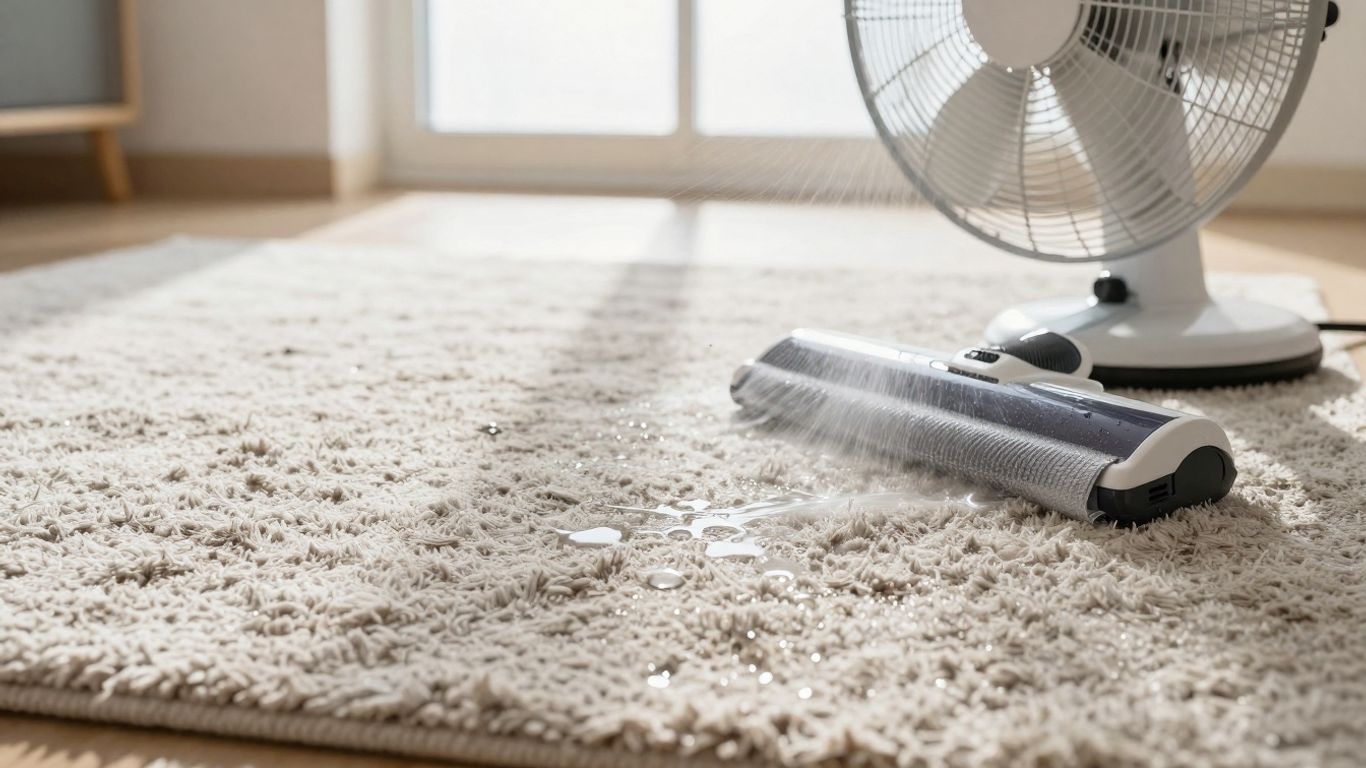
So, your carpets have just had a good clean, and you're eager to get back to normal life. But that damp feeling can linger, and nobody wants a carpet that takes ages to dry.
Luckily, there are a few things you can do to speed things up. It's all about creating the right environment for that moisture to escape.
Maximising Airflow For Faster Drying
Good airflow is your best friend when it comes to drying carpets. Think of it like drying your hair – if you just let it sit, it takes forever. But with a hairdryer, it's much quicker. The same principle applies here. You want to encourage the moist air around the carpet to move away and be replaced by drier air.
Here’s how to get that air moving:
- Open windows and doors: If the weather outside is dry and not too humid, cracking them open can create a natural draft. Just make sure it's not raining or excessively damp outside.
- Use fans: Ceiling fans are great for general circulation. For more targeted drying, position portable fans (like pedestal or box fans) to blow air directly across the carpeted areas. Aiming them at the dampest spots can make a real difference.
- Turn on your air conditioning (if applicable): Many air conditioning systems also help to dehumidify the air, which can speed up the drying process, especially on muggy days.
The Role Of Dehumidifiers
If you live in a particularly humid area, or if the weather just isn't cooperating, a dehumidifier can be a game-changer. These clever machines are designed to pull moisture right out of the air. Less moisture in the air means the carpet can release its own moisture more effectively.
- Placement is key: Position the dehumidifier in the room with the dampest carpet. Make sure it has enough space around it to draw air in and expel drier air.
- Empty regularly: Keep an eye on the water tank and empty it as needed. A full tank will stop the machine from working.
- Combine with fans: Using a dehumidifier alongside fans can create a super-powered drying system. The fans move the air, and the dehumidifier removes the moisture from it.
What To Avoid When Speeding Up Drying
While you want to speed things up, there are a few common mistakes people make that can actually hinder the drying process or even damage your carpet.
- Don't turn up the heat too high: While warm air helps evaporation, excessively high temperatures can sometimes damage certain carpet fibres or even set in residual stains. A comfortable room temperature is usually best.
- Avoid walking on it too soon: We'll cover this more later, but walking on a damp carpet can push moisture deeper into the backing and padding, prolonging drying time and potentially causing damage or attracting dirt.
- Don't cover it up: Resist the urge to put furniture back too soon or lay down rugs. These block airflow and trap moisture, creating a perfect environment for mould and mildew.
It's tempting to try and speed things up by using heat sources like portable heaters directly on the carpet, but this is generally not recommended. It can lead to uneven drying, potential fibre damage, and even create a fire hazard. Stick to airflow and dehumidification for the safest and most effective results.
Method | Effectiveness in drying | Notes |
|---|---|---|
Fans (ceiling/portable) | Good | Increases air circulation, helps evaporate surface moisture. |
Dehumidifier | Very Good | Actively removes moisture from the air, speeding up evaporation. |
Open Windows (dry air) | Good | Allows fresh, dry air in, replacing moist indoor air. |
Air Conditioning | Good | Can help dehumidify the air, especially in warmer, humid conditions. |
Carpet Material And Its Impact On Drying
So, you've had your carpets cleaned, and you're wondering how long it'll take for them to dry. Well, it's not just about the cleaning method or the weather outside. The actual stuff your carpet is made of plays a pretty big role, too. Different fibres absorb and release moisture at different rates, which can significantly alter the drying timeline.
How Fibre Type Affects Carpet Cleaning Drying Time
Generally speaking, natural fibres like wool tend to retain moisture for longer than synthetic materials such as nylon or polyester. This is because natural fibres have a more complex structure that allows them to absorb more water.
Synthetic carpets, on the other hand, are less absorbent and tend to dry out quicker. If you have a wool carpet, you might need to be a bit more patient.
- Wool: Dries more slowly due to its natural absorbency.
- Nylon/Polyester: Dries faster, as these synthetics are less porous.
- Blends: Drying time will vary depending on the ratio of natural to synthetic fibres.
It's worth noting that the dirt level of your carpet can also influence drying. A heavily soiled carpet might need more water during cleaning, which naturally means it'll take longer to dry out completely.
Thickness And Pile Height Considerations
Beyond the fibre type, how your carpet is constructed also matters. A thick, plush carpet with a deep pile will hold more water than a low-pile or tightly woven carpet. Think of it like a sponge – a bigger sponge soaks up more liquid. So, if you've got a luxurious shag carpet, expect it to take a bit longer to fully dry than a more compact Berber style. This is why professional carpet cleaning in areas like Beckenham often accounts for these variations.
Carpet type | Typical drying time (post-cleaning) |
|---|---|
Low pile/Berber | 4-8 hours |
Medium pile | 6-12 hours |
High pile/Shag | 8-24 hours |
Specific Care For Natural Fibres
When it comes to natural fibres like wool, it's especially important to be mindful of the drying process. Avoid using excessive heat to speed things up, as high temperatures can actually damage these delicate fibres, potentially causing shrinkage or altering their texture.
Instead, focus on good airflow and, if needed, a dehumidifier. If you're unsure about the best approach for your specific carpet material, it's always a good idea to follow your carpet cleaning service's recommendations.
When dealing with natural fibres, patience is key. Rushing the drying process can lead to unintended consequences, so it's better to let them dry at their own pace, aided by gentle airflow, rather than risking damage with aggressive drying methods.
Post-Cleaning Carpet Care And Maintenance
So, the professionals have packed up, and your carpets look and smell a whole lot better. Brilliant! But hold on a minute, the job isn't quite finished yet. What you do in the hours and days following a professional clean can make a massive difference to how long that fresh feeling lasts. It’s all about protecting your investment, really.
Protecting Your Carpet Immediately After Cleaning
Right after the cleaning crew leaves, your carpet is still a bit delicate. Think of it like a freshly painted wall – it needs time to cure. The fibres might feel dry on the surface, but there could still be moisture lurking deeper down.
This is why it’s super important to limit traffic. If you absolutely must put furniture back, make sure you use protective pads or foil under the legs. Most companies leave small plastic squares or foam blocks under furniture legs; leave them in place until the carpet is fully dry to prevent any wood stains or rust marks from transferring.
It’s also a good idea to have some clean socks or disposable covers ready for anyone who needs to walk on the carpet before it's completely dry. This stops oils and dirt from your feet transferring onto the damp fibres.
When To Vacuum After Carpet Cleaning
Resist the urge to grab the vacuum straight away. You need to let the carpet dry completely first. Once it feels properly dry to the touch, and ideally after a full 24 hours, a good vacuum is your best friend. This helps to lift the pile, making it feel soft and fluffy again, and it also picks up any tiny bits of soil that might have been brought closer to the surface during the cleaning process.
It’s especially helpful if you had a deep clean using hot water extraction. A gentle vacuuming session really helps restore that just-cleaned texture.
Preventing Future Soiling And Stains
Now that your carpets are looking their best, you'll want to keep them that way. A few simple habits can go a long way. Placing doormats both outside and inside your main doors is a simple but effective way to trap dirt before it even gets tracked onto your carpets.
Enforcing a 'shoes off at the door' policy is probably the single biggest thing you can do to reduce the amount of dirt and grime that ends up on your floors. For high-traffic areas, consider using area rugs or runners. These act as a protective layer and are much easier to clean or replace if they get heavily soiled.
And of course, if you do have a spill, tackle it immediately. Blot, don't rub, with a clean cloth. Quick action can prevent a minor mishap from becoming a permanent stain. Regular vacuuming, at least twice a week in busy spots, and when the time for maintenance comes, you can count on Excellent Carpet Cleaners. Our pricing is fair, and we always give clients a free, no-obligation quote.
The post-cleaning phase is just as vital as the cleaning itself. Proper aftercare ensures the fibres are protected, drying is complete, and new dirt is kept at bay. Rushing this stage can undo the professionals' hard work and lead to issues such as re-soiling or lingering dampness.
Keeping your carpets looking fresh after a clean is easy! Simple steps like regular vacuuming and dealing with spills straight away can make a big difference.
So, When Can You Actually Walk On It?
Right then, we've gone through all the ins and outs of carpet cleaning times. Remember, patience is key here. Rushing back onto a damp carpet can undo all that hard work, leading to flattened fibres, re-soiling, or even mould if things get too wet.
Whether it was a quick dry clean or a deep steam, always give it plenty of time to dry completely. A quick touch test or a paper towel check should tell you if it's ready. Stick to your professional carpet cleaner's advice, keep the windows open if you can, and soon enough you'll be able to enjoy your refreshed carpets without a worry.
Frequently Asked Questions (FAQ)
How soon can I walk on my carpet after it's been cleaned?
It's best to wait until your carpet is completely dry before walking on it. This usually takes between 4 to 24 hours, depending on how it was cleaned and the conditions in your home. Walking on it too soon can flatten the fibres and make it dirty again.
What's the difference in drying times for various cleaning methods?
You can try cleaning them yourself, but it takes a lot of time and effort. Professional cleaners have specialised tools and know-how to get carpets really clean, far better than you can at home. It's often worth it to avoid missing spots or having to buy cleaning gear.
How can I tell if my carpet is dry enough to walk on?
A simple way to check is to touch the carpet. If it feels dry and not cool or damp, it's likely ready. You can also place a dry paper towel on it; if the towel stays dry, the carpet should be good to go.
What are the risks of walking on a wet carpet?
Walking on a wet carpet can cause damage. It can flatten the fibres, making them look worn, and it can also attract dirt more easily, making it look dirty again quickly. Plus, damp carpets can become a breeding ground for mould and mildew, which isn't good for your health.
Are there ways to make my carpet dry faster?
Yes! You can speed things up by improving air circulation. Open windows, use fans, or turn on a dehumidifier to remove moisture from the air. Just make sure not to put heavy furniture back too soon, as this can trap moisture underneath.
Does the type of carpet material affect how long it takes to dry?
Absolutely. Thicker carpets or those made from natural fibres like wool tend to hold more moisture and take longer to dry. Thinner carpets or those made from synthetic materials usually dry much faster.
